
Shipping Incoterms Explained (2026): A Complete Guide to All 11 Incoterms
14 August, 2026
If you’re importing or exporting goods internationally, understanding Shipping Incoterms is essential. These internationally recognised International Commercial Terms (Incoterms) determine who is responsible for the costs, risks and logistics at every stage of the international shipping journey.
Choosing the wrong shipping terms or freight Incoterms can result in unexpected charges, customs delays or disputes between buyers and suppliers. This guide explains every Incoterm, buyer and seller responsibility, and how to choose the right option for your import and export shipping requirements.
What Are Incoterms?
Incoterms (International Commercial Terms) are a set of internationally recognised rules used in sales contracts for international trade, importing and exporting goods.
Created by the International Chamber of Commerce (ICC), Incoterms define exactly when responsibility transfers from the seller to the buyer during the shipping process. Understanding these shipping Incoterms is essential for businesses involved in international freight, sea freight, air freight, road transport and multimodal shipping.
In simple terms, they answer questions such as:
- Who arranges transport?
- Who pays freight costs?
- Who arranges cargo insurance?
- Who clears customs?
- When does the risk transfer from seller to buyer?
For example:
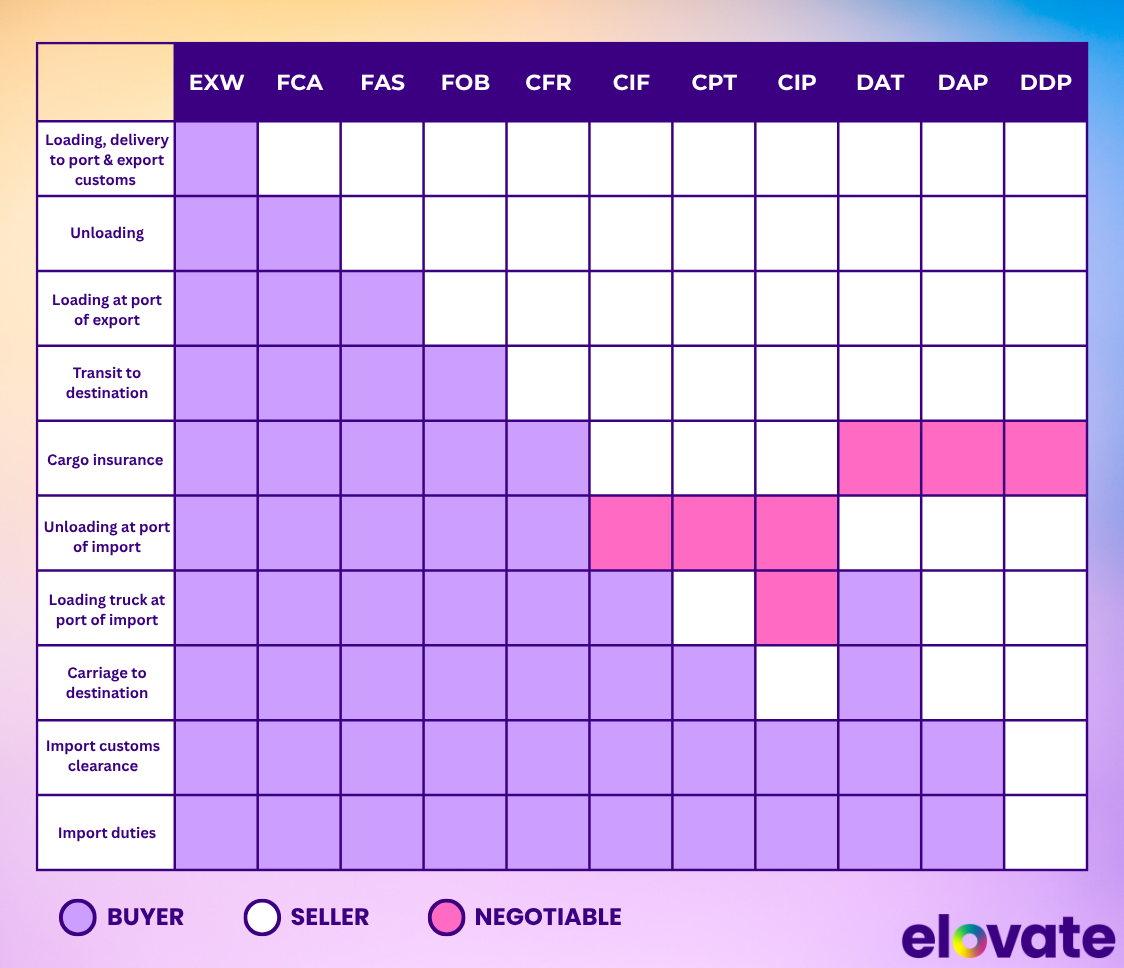
Under EXW (Ex Works), the buyer is responsible for almost the entire shipping process, including transport, export clearance and import procedures. Whereas, under DDP (Delivered Duty Paid), the seller is responsible for nearly everything until the goods arrive at the buyer’s premises, including customs duties and taxes.
Most aspects of the Incoterms are fixed and cannot be changed, as they are internationally recognised rules. However, the buyer and seller can agree on additional responsibilities outside the standard Incoterm obligations. This is most commonly seen with the C and D groups, where the parties may negotiate who arranges cargo insurance (where applicable), who unloads the goods at the port of import or final destination, or who loads the goods onto onward transport after arrival. Agreeing these details before the contract is finalised helps avoid misunderstandings, unexpected costs and delays during shipping.
What Are the Incoterms 2020 Rules?
The current version is known as Incoterms 2020, introduced by the ICC in 2020. The ICC reviews and updates these rules approximately every ten years to reflect changes in international shipping, global logistics and international trade practices.
There are 11 official Incoterms, divided into two categories:
- Rules for any mode of transport
- Rules for sea and inland waterway transport
Incoterms for Any Mode of Transport
These shipping Incoterms can be used for any transport method, including road, rail, air freight, sea freight and multimodal (mixed) shipping.
- EXW (Ex Works): The seller’s only responsibility is to make the goods available at their own premises (e.g. factory or warehouse). The buyer bears all costs, risks and responsibilities for export, transit and import. EXW shipping means maximum responsibility for the buyer.
- FCA (Free Carrier): The seller delivers the goods, cleared for export, to a named location (such as a terminal or carrier’s premises). Once handed over, the buyer assumes all risks and transportation costs. FCA shipping is one of the most commonly used Incoterms for container shipping.
- CPT (Carriage Paid To): The seller pays for the freight to transport the goods to a named destination. However, risk transfers to the buyer as soon as the goods are handed to the first carrier.
- CIP (Carriage and Insurance Paid To): Similar to CPT, but the seller is also required to purchase cargo insurance to the named destination. In CIP shipping, risk transfers when goods are handed to the first carrier.
- DAP (Delivered at Place): The seller assumes all costs and risks associated with delivering the goods to the named destination but does not include unloading. In DAP shipping, the buyer is responsible for import customs clearance, duties and taxes.
- DPU (Delivered at Place Unloaded): Replaces the older DAT rule. The seller handles all transport to the named destination and covers the costs and risks of unloading the goods. In DPU shipping, the buyer handles import customs clearance.
- DDP (Delivered Duty Paid): The seller holds the maximum level of responsibility. They cover all costs and risks, including delivery to the buyer’s premises, customs clearance, import duties and taxes. DDP shipping is often chosen when buyers want a fully managed delivery service.
Incoterms for Sea and Inland Waterway Transport
These four sea freight Incoterms are reserved strictly for maritime and inland waterway transport, where goods are placed on a vessel.
- FAS (Free Alongside Ship): The seller delivers the goods when they are placed alongside the buyer’s designated vessel at the named port of shipment. The risk and cost transfer to the buyer from that moment.
- FOB (Free on Board): The seller is responsible for delivering the goods on board the ship nominated by the buyer at the named port of loading. Risk and cost pass to the buyer once the goods are on board. FOB shipping is one of the most recognised shipping terms for sea freight.
- CFR (Cost and Freight): The seller pays for the transportation of the goods to the named port of destination. However, the risk of loss or damage passes to the buyer once the goods are loaded on board the vessel.
- CIF (Cost, Insurance and Freight): Identical to CFR, but with the additional requirement that the seller must purchase minimum marine cargo insurance against the buyer’s risk of loss or damage during transit. CIF shipping is commonly used when buyers require insurance to be included.
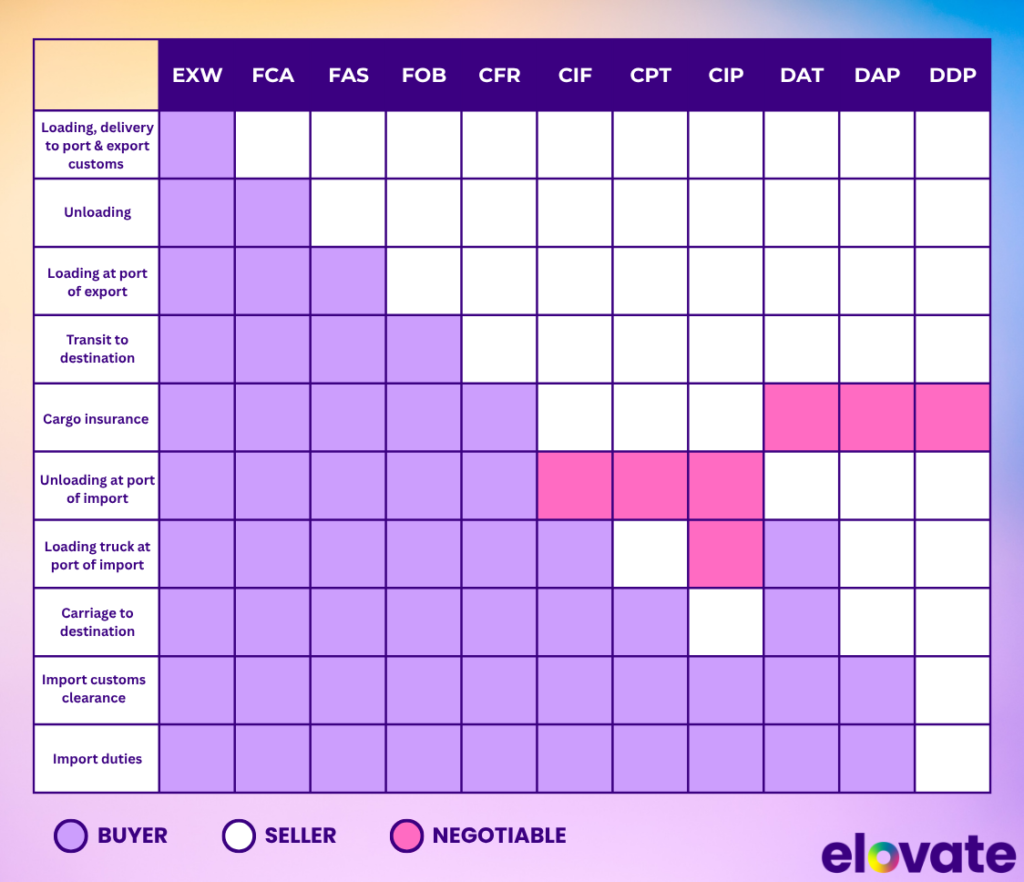
Download this Incoterms table for a clear overview of responsibility at every stage of the shipping process.
The Four Incoterm Groups Explained
The 11 Incoterms are grouped according to the first letter of each abbreviation.
Group E: (EXW)
The buyer takes on almost all costs and risks from the seller’s premises.
Group F: (FCA, FAS, FOB)
The seller delivers the goods to a carrier or vessel. The buyer pays for the main international transport and assumes the associated risks.
Group C: (CPT, CIP, CFR, CIF)
The seller pays for the main carriage. However, the risk transfers to the buyer before the goods reach their final destination.
Group D: (DAP, DPU, DDP)
The seller remains responsible for the goods until they arrive at the agreed destination. These terms provide the highest level of seller responsibility.
Air Freight Incoterms
Although there are no Incoterms exclusively for air freight shipping, the following are commonly used for air cargo and international air transport:
- EXW (Ex Works)
- CIP (Carriage and Insurance Paid To)
- CPT (Carriage Paid To)
- DAP (Delivered at Place)
- DDP (Delivered Duty Paid)
These Incoterms for air freight clearly define responsibilities, transport costs, insurance obligations and customs procedures between buyers and sellers. FOB, CIF, CFR and FAS should not be used for air freight because they are designed specifically for sea and inland waterway transport.
Why Are Incoterms Important in 2026?
Importers and exporters should consider which shipping Incoterm is best for them before negotiating the contract of sale. Choosing the correct International Commercial Term can prevent unexpected costs, customs delays and unnecessary complications throughout the supply chain.
Selecting the right freight Incoterms means getting on the same page as your supplier. It aligns everyone on shipping procedures when multiple parties and stakeholders are involved. These globally accepted international shipping terms ensure the timely payment of goods, services and duties while protecting suppliers, freight forwarders, carriers and buyers.
Whether you’re arranging sea freight, air freight, road transport or multimodal shipping, understanding shipping Incoterms and the responsibilities attached to each term will help your business minimise risk and improve the efficiency of its import and export shipping operations.
Incoterms and Fulfilment Companies
If you use a fulfilment company to store and distribute your products, it’s important to understand the Incoterm agreed with your supplier. While fulfilment companies don’t usually select the Incoterm themselves, they work within the responsibilities defined by it. For example, under DDP, goods typically arrive at the fulfilment centre with duties and taxes already paid. Under EXW or FCA, the buyer may need to arrange collection, international shipping and customs clearance before the goods reach the fulfilment warehouse. Choosing the right Incoterm helps ensure a smoother transition from international shipping to order fulfilment and delivery to your customers.
If you’re looking for a trusted fulfilment partner, ELOVATE can help manage your inventory, storage, pick and pack, and order distribution, ensuring your products move seamlessly from international shipping to your customers.